
Review · WORLDWIDE
Mumbai: A Symphony of Seven Islands – Get Local in One Day
Mumbai becomes much easier to understand when you follow its story rather than simply tick off sights. This one-day tour moves from the Gateway of India through imperial landmarks, old Portuguese streets, Chor Bazaar, Dhobi Ghat and a beach sunset, using the city’s own trains, buses, taxis and auto-rickshaws as part of the plot. Shrijit, the guide, acts as narrator.
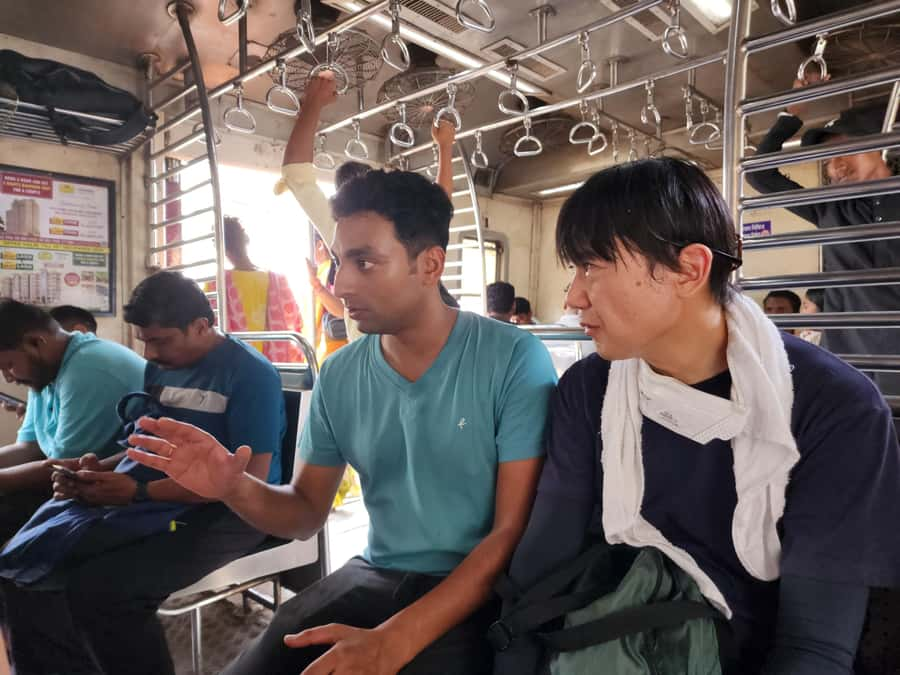
I like two things especially: the local transport, which gives you a real sense of Mumbai’s scale and daily rhythm, and the way food is built into the day with vada pav and pav bhaji. You also get more than postcard views, including old residential lanes and the city’s working districts. The drawback is that this is a full, active day with plenty of walking, crowded public transport and changing road conditions, so it is not suited to wheelchair users or anyone wanting a slow, quiet outing.
Key points at a glance
- Four-part city story: Follow Mumbai from imperial Bombay to present-day Aamchi Mumbai.
- Real local movement: Travel by train, public bus, taxi and auto-rickshaw rather than staying in a private vehicle.
- Food included: Try vada pav and pav bhaji, with local sweets available at an extra cost.
- Strong historic range: See the Gateway of India, St. Thomas Church, CST, old Portuguese homes and colonial civic buildings.
- Useful practical tip: Carry at least Rs. 300 in cash for taxi fares, even though the total taxi cost should not exceed Rs. 150.
- Best for active sightseers: Expect walking, stairs or uneven streets, crowded transport and a long day on your feet.
Mumbai told in four scenes
The clever idea here is that Mumbai is not treated as a collection of disconnected attractions. The tour follows a script called A Symphony of Seven Islands, a reference to the seven islands that eventually became modern Mumbai.
That structure matters. You begin with the city’s imperial waterfront, move into its Portuguese past, then see its rougher commercial core before finishing among apartment towers, public spaces and the Arabian Sea. Each scene gives you a different answer to the question: what exactly is Mumbai?
Shrijit’s role is central. He is not simply pointing out buildings and naming dates. He links each neighborhood to the next, so the train ride or bus journey becomes part of the story. The result is a day that feels more like a moving city lesson than a standard sightseeing circuit.
You should still set realistic expectations. This is not a private-car tour with air-conditioning and long pauses at every sight. You will walk through busy areas, use public transport and deal with Mumbai traffic. That is also the point. You see how the city works, not just how it photographs.
Day-long island trips around the world:
- Krabi: Premium 4-Island Day Trip by Longtail Boat with Lunch
★ 4.5 · 4,812 reviews - Krabi: Hong Islands Day Trip by Speedboat with Lunch
★ 4.5 · 3,952 reviews - Sardinia: La Maddalena Archipelago Full-Day Trip by Boat
★ 4.6 · 2,710 reviews
Scene One: Gateway of India to CST
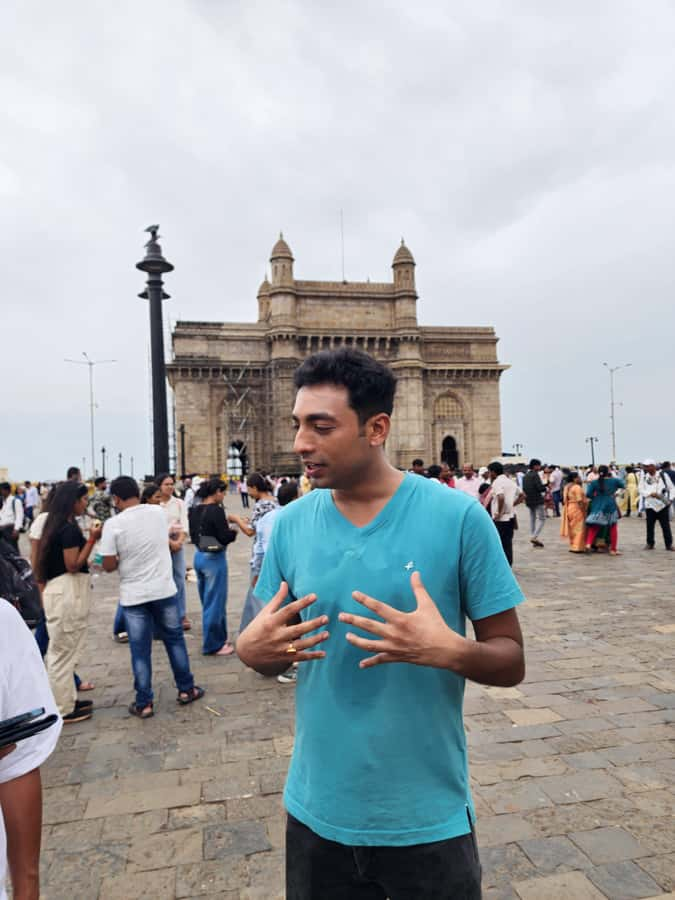
The day begins at the Gateway of India, the right place for a story about Mumbai’s contact with the outside world. The waterfront monument carries the memory of British rule and the ships, officials and visitors who entered the city through its harbor.
From there, you walk through Colaba. This area lets you move quickly between grand architecture, shops, street life and older lanes. You are not confined to one polished heritage street. The contrast between tourist-facing Colaba and its everyday activity helps explain why Mumbai can feel formal and unruly within the same block.
The route continues toward St. Thomas Church, Mumbai’s oldest Anglican church. It is a quieter stop than the Gateway, and that change in pace is useful. The church places the city’s colonial period in a more personal setting, away from the large monuments and waterfront crowds.
You then pass a series of important civic and financial landmarks: the Bombay Stock Exchange, Flora Fountain, Bombay University and the High Court. These buildings show how Bombay grew into an administrative, commercial and educational center. Pay attention to the architecture as you walk. The point is not only to photograph handsome facades, but to see how the city’s public institutions were arranged around its expanding commercial life.
The route reaches Marine Drive, where the architectural mood changes again. Here, the city’s later development comes into view, with broad roads, apartment buildings and the famous curve along the Arabian Sea. This is a good place to see Mumbai as a city that kept rebuilding itself rather than preserving one single historical style.
Then comes one of the tour’s most useful choices: a local bus ride to Chhatrapati Shivaji Maharaj Terminus, usually called CST. Instead of treating transport as dead time, the tour uses it to show you another side of the city. You see streets at a more ordinary pace, sharing the road with residents on their daily errands.
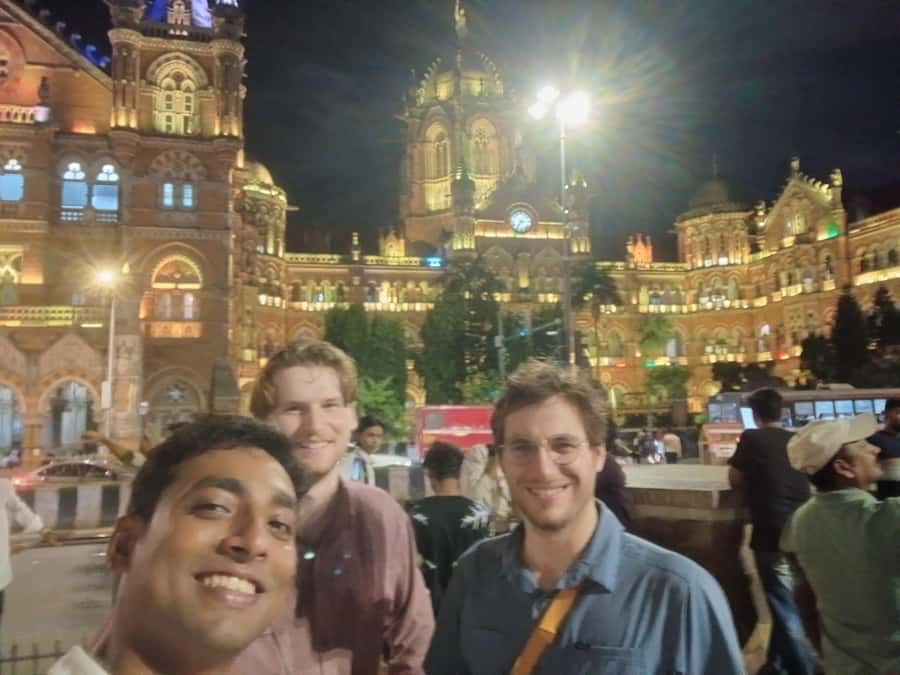
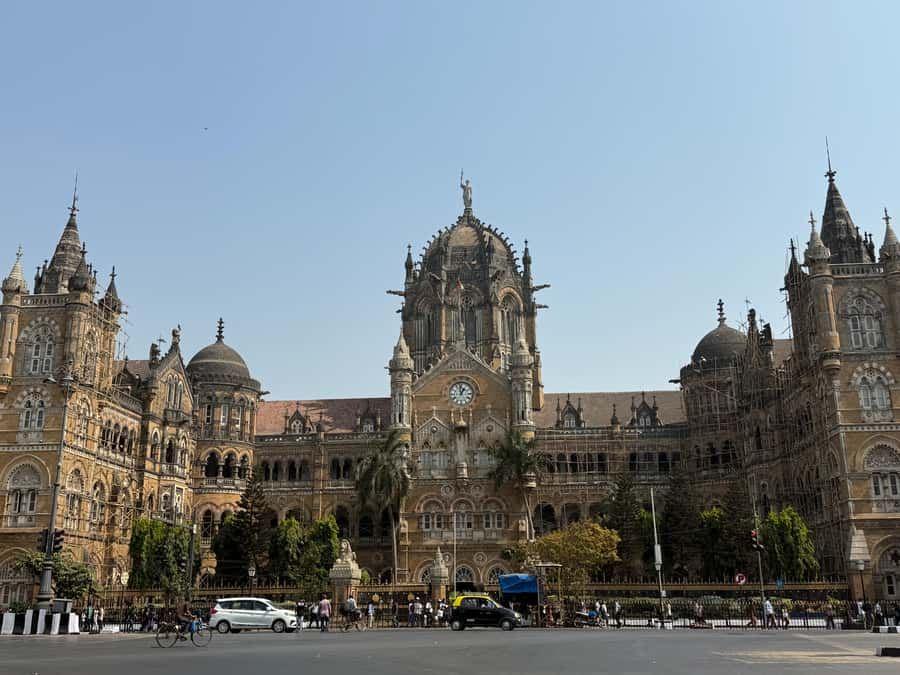
CST is the architectural highlight of this first section. The station is a UNESCO World Heritage Site, and its elaborate design reflects the ambition of colonial Bombay. It is also a working railway station, not a museum frozen for visitors. That combination makes the stop more interesting, though it can also mean noise, crowds and a lot of visual activity.
Food arrives here in the form of pav bhaji, a Mumbai classic made with spiced vegetables served with buttered bread rolls. It is filling, informal and very much suited to a day spent walking. The included meal adds real value to the $34 price, especially because it gives you a direct taste of the city rather than another restaurant chosen only for visitors.
Scene Two: The Portuguese traces of Bom Bahia
From CST, you board a train and travel into a very different part of Mumbai. The ride is more than a practical connection. It takes you away from the grand colonial center and toward a small Indo-Latin quarter surrounded by modern development.
The neighborhood’s older homes have sloping roofs, arched windows and a distinctly Portuguese feel. Some are around 200 years old. The setting can be surprising: high-rise buildings loom nearby, while the lanes themselves suggest a village or a part of Goa.
This is one of the most rewarding sections for anyone who wants to see what survives beneath Mumbai’s rapid growth. You are not only looking at monuments built for empire. You are seeing domestic architecture, narrow streets and a community area that has kept traces of an older identity.
The tour calls this chapter Bom Bahia, or Good Bay, tying the name to Mumbai’s early connection with the wider world. The reference helps explain why the city became a major port. Goods, people and ideas arrived by sea, and the city’s mix of cultural influences grew from those contacts.
A hilltop garden provides views toward the docks. The outlook is valuable because it connects the quiet neighborhood to the working port below. Ships once arrived from distant places carrying trade and political power, and the harbor remains a key part of Mumbai’s identity.
Do not expect a long scenic break here. The value is in the contrast between the old homes, the port views and the surrounding towers. You will want comfortable shoes because the experience depends on walking through lanes rather than viewing the area from a vehicle.
Scene Three: Black Town and Chor Bazaar
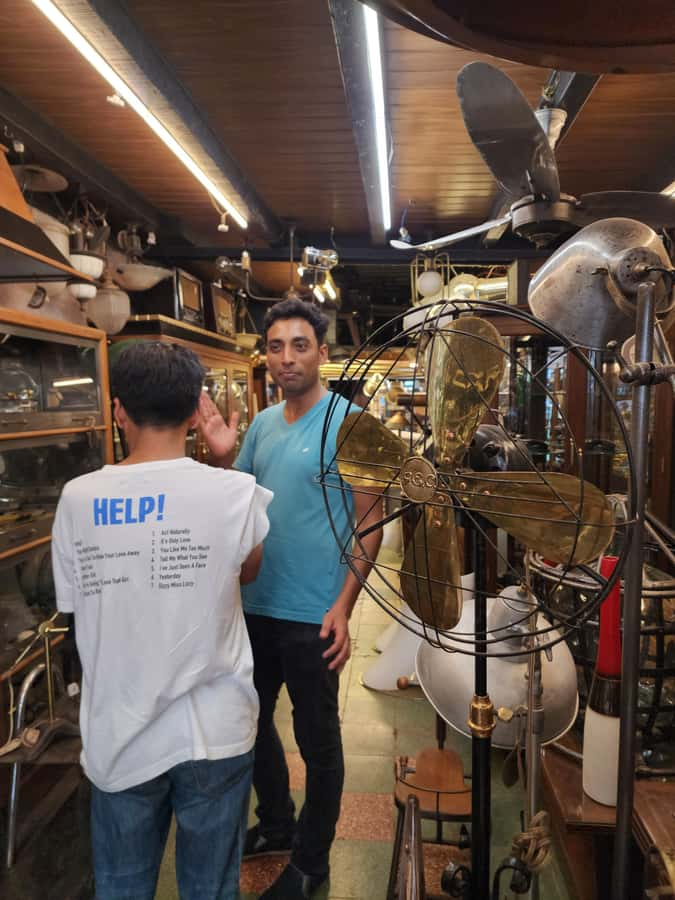
A taxi takes you into the area described as Black Town, a name linked to the city’s older racial and commercial divisions. The phrase is blunt, and the setting is less polished than Colaba or Marine Drive. That difference is intentional.
Here, Mumbai’s working energy comes to the front. The streets can feel crowded, noisy and chaotic, but they also show the city’s trading instincts and constant movement. This is not a scene designed for spotless photo opportunities. It is a chance to look at the part of Mumbai that keeps goods, businesses and daily commerce moving.
Chor Bazaar is the main stop. The market is known for antiques and secondhand objects, and browsing is part of the fun. You may find old household items, decorative pieces or objects with unclear histories, so keep your expectations sensible. This is not a guaranteed shopping list, and you should examine anything you might buy with care.
The area also gives you a view of Mumbai’s economic center at street level. Instead of only seeing banks, offices or grand facades, you encounter the small-scale trade and crowded lanes that support the larger city.
If you have room after pav bhaji, you can stop at a sweet shop that has been operating for about a century. Desserts are optional and not included, so carry cash if you want to try something. The stop is a pleasant extra, but the main value of this scene is the neighborhood itself.
You then return to a nearby railway station. This keeps the day moving, though it also means there is little room for lingering. If you prefer long shopping sessions, you may find Chor Bazaar too brief. If you want a guided introduction before exploring on your own, the stop gives you a useful first look.
More island days out of the world:
- Santorini: Volcanic Islands Cruise with Hot Springs Visit
★ 4.4 · 10,869 reviews - Stockholm: City Archipelago Sightseeing Cruise with Guide
★ 4.3 · 10,798 reviews - Full-Day Dubrovnik Elaphite Islands Cruise with Lunch and Drinks
★ 5.0 · 8,823 reviews - Blue cave, Mamma Mia and Hvar, 5 islands speedboat tour
★ 5.0 · 7,150 reviews
Scene Four: Dhobi Ghat, Shivaji Park and the sea
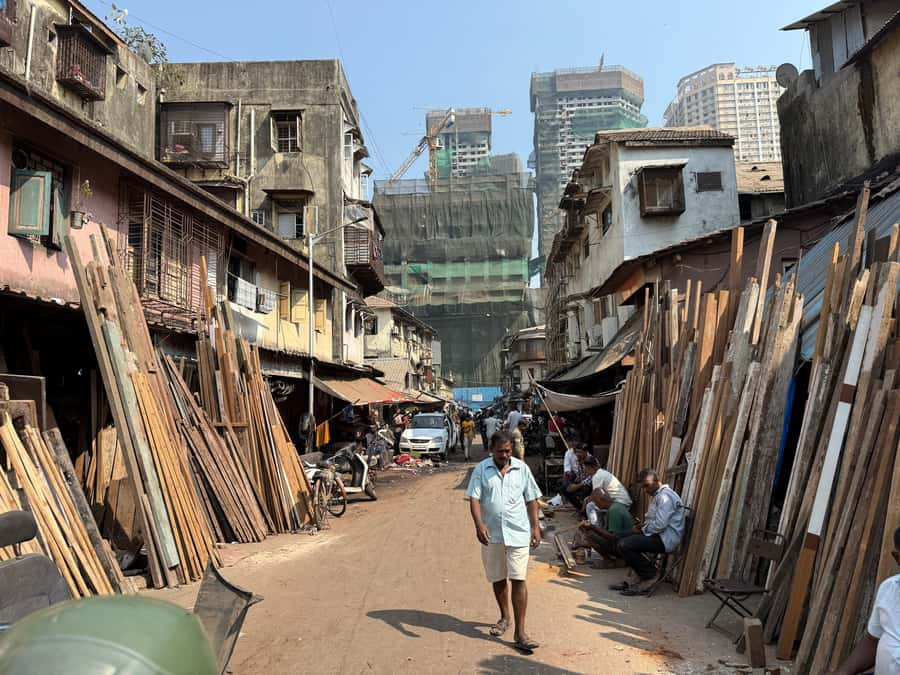
The final chapter changes the scale again. You board a train into Mumbai’s high-rise city, where concrete towers rise into a skyline that can feel surprisingly modern and dense.
From an elevated viewpoint, you look down toward Dhobi Ghat, the open-air laundry that has become one of Mumbai’s best-known symbols. The view works because it shows an organized system of work in the middle of a huge urban environment. Laundry, rail lines, apartment blocks and traffic all sit close together.
The exact experience depends on the viewing point and the day’s conditions, but the larger lesson is clear: Mumbai’s size does not erase its older working systems. The city keeps layering new buildings and infrastructure over long-established ways of earning a living.
A bus ride then carries you through the wider metropolis toward Shivaji Park. Again, the transport is part of the experience. You are not simply being delivered to the next attraction. You get a moving view of ordinary streets, traffic and the city’s different neighborhoods.
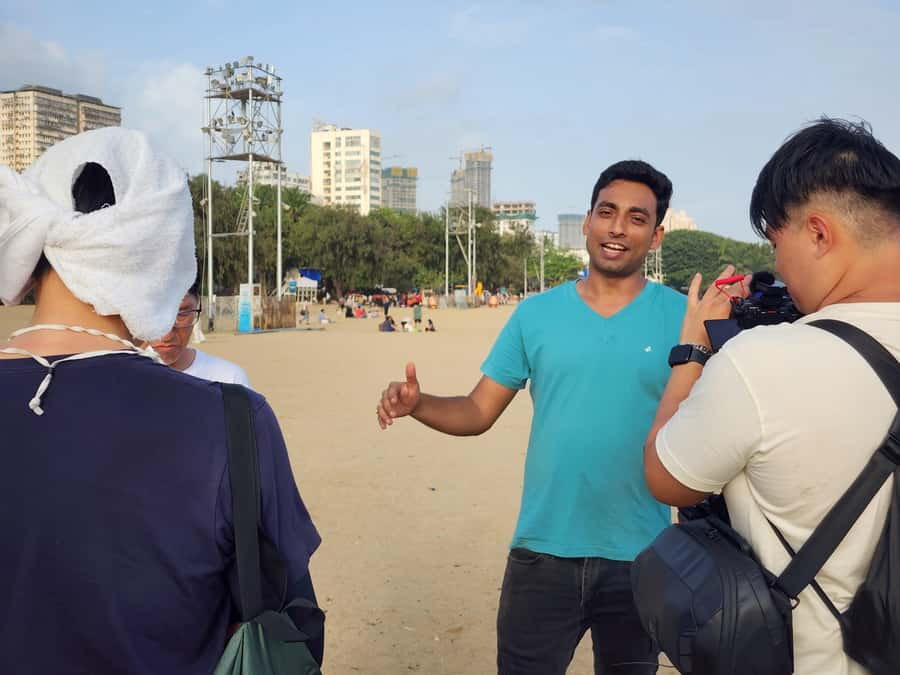
Shivaji Park is described as the cultural heart of Mumbai. It offers a break from the density of the commercial center and leads into a more relaxed final walk. From there, you continue toward a nearby beach for sunset over the Arabian Sea.
This ending is well chosen. After a day of stations, markets, old houses and crowded streets, the sea gives you space to think about the city’s long development. Mumbai began as islands and a harbor settlement, and the water remains part of its identity even after the city has spread into a vast urban center.
The sunset is weather-dependent, of course. Even if clouds or haze soften the view, the walk and open shoreline provide a natural change of pace after a packed itinerary.
Why the local transport matters
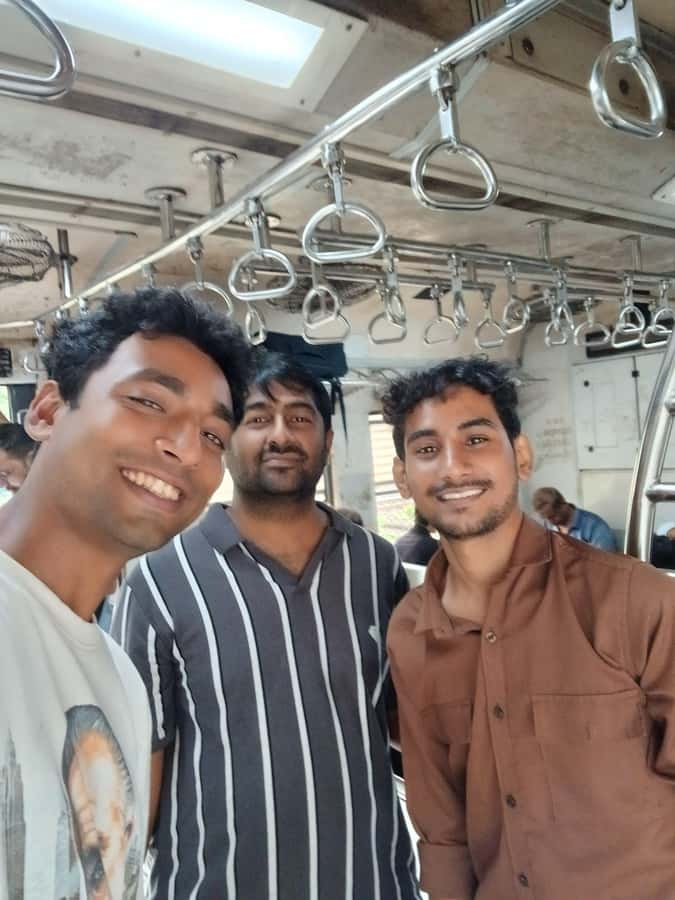
The transport mix is one of the strongest reasons to choose this tour. You use a local bus, train, taxi and auto-rickshaw, with the exact order shaped by the four scenes. Auto fare and train fare are included, while taxi fares are paid separately.
Each mode gives you a different view of Mumbai:
- The train shows the city’s scale and gives you a direct look at one of its most important public systems.
- The bus keeps you at street level, where you can watch neighborhoods pass by.
- The taxi reaches areas that may be less direct by public transport.
- The auto-rickshaw adds a short, open-sided ride that feels especially local.
This arrangement is not the most comfortable way to cross Mumbai, but comfort is not the main goal. You get a practical sense of how residents connect distant districts, and you avoid experiencing the city only through a sealed vehicle.
Traffic can affect the day. One rating specifically praised the operator for being on time despite Mumbai traffic, but you should still expect the city to shape the schedule. Bring water, use hand sanitizer or tissues, and wear shoes that can handle a full day of walking.
Is $34 good value?
At $34 per person, this is strong value if you want a broad first look at Mumbai rather than a single neighborhood tour. The price includes an expert local guide, bottled water, auto and train fares, vada pav and pav bhaji.
You still need cash for taxi fares. The stated taxi total should not exceed Rs. 150, but you are advised to carry at least Rs. 300. That is sensible because the fares use dynamic pricing. Keep extra money available for optional sweets and any market purchase.
The value comes mainly from the structure and transport. Hiring separate rides, finding the old Portuguese quarter, locating the right views and connecting the scenes would take time and local planning. You also get the narrative thread, which helps the stops make sense together.
The tradeoff is pace. You pay for coverage, not a relaxed day at two or three sights. If you want air-conditioned comfort, extended meals or a deep visit inside each landmark, this is not the right format.
Who should book this experience?
I would recommend it to first-time visitors who want to understand how Mumbai fits together. It suits curious adults who enjoy walking, public transport, street food, architecture and local neighborhoods more than polished sightseeing.
It is also a good choice if you have only one open day and want to see several sides of the city. The route includes famous places, but it also reaches areas you might not find easily on your own.
You should think twice if you have limited mobility, dislike crowded transport or need frequent rest stops. The tour is not suitable for wheelchair users, babies under one year or people over 95. Comfortable clothes and shoes are essential.
The experience is offered in English. You can reserve now and pay later, and cancellation is allowed up to 24 hours before the tour for a full refund.
Should you book the Symphony of Seven Islands?
Book it if you want Mumbai explained as a living city rather than presented as a checklist of monuments. The combination of Shrijit’s storytelling, local trains, street-level transport, old homes, Chor Bazaar, Dhobi Ghat and two included foods gives you a remarkably wide introduction for $34.
Skip it if you prefer a private vehicle, a short itinerary or a slow museum-style tour. This is a busy day with crowds, walking and changing traffic. For an active visitor who wants to get local in one day, though, it makes a persuasive choice.
FAQ
How much does the tour cost?
The price is $34 per person.
What food is included?
The tour includes vada pav and pav bhaji. Desserts are optional and cost extra.
Which transport is used?
You travel by local train, public bus, taxi and auto-rickshaw during the day.
Are transport fares included?
Auto fare and train fare are included. Taxi fare is not included and uses dynamic pricing. The expected total taxi cost should not exceed Rs. 150, but you should carry at least Rs. 300 in cash.
What language is the tour offered in?
The tour is offered in English.
Is the tour suitable for wheelchair users?
No. The experience is not suitable for wheelchair users.
What should I bring?
Bring comfortable shoes, comfortable clothes, cash, hand sanitizer or tissues, and use the included bottled water as needed.
Can I cancel or pay later?
You can reserve and pay later. You can also cancel up to 24 hours in advance for a full refund.
Fresh island hops added around the world
- Full Day Phi Phi Islands Tour By Royal Jet Cruiser From Phuket★ 4.0 · 4 reviews
- James Bond Island Canoeing 7 Point 5 Island By Speedboat From Phuket★ 4.5 · 36 reviews
- 12 Islands Overnight Tour★ 4.0 · 47 reviews
- 4 Hours Jet Ski Experience Hopping To 9 Islands in Phuket★ 3.5 · 19 reviews
- Phi Phi Islands Day Tour Bamboo and Maya Bay with Lunch By Speedboat★ 4.5 · 3 reviews
- Hon Thơm Cable car & 3-island hopping trip by boat★ 3.5 · 2 reviews
- Three Islands Canoe Tour in Phu Quoc★ 4.5 · 5 reviews
- 3-Island Speedboat Tour: Racha Noi, Racha Yai & Maiton★ 5.0 · 3 reviews